More Than Just Aesthetics: Premium Commercial Video Is an Investment, Not an Expense
Contributor
Admin IDM
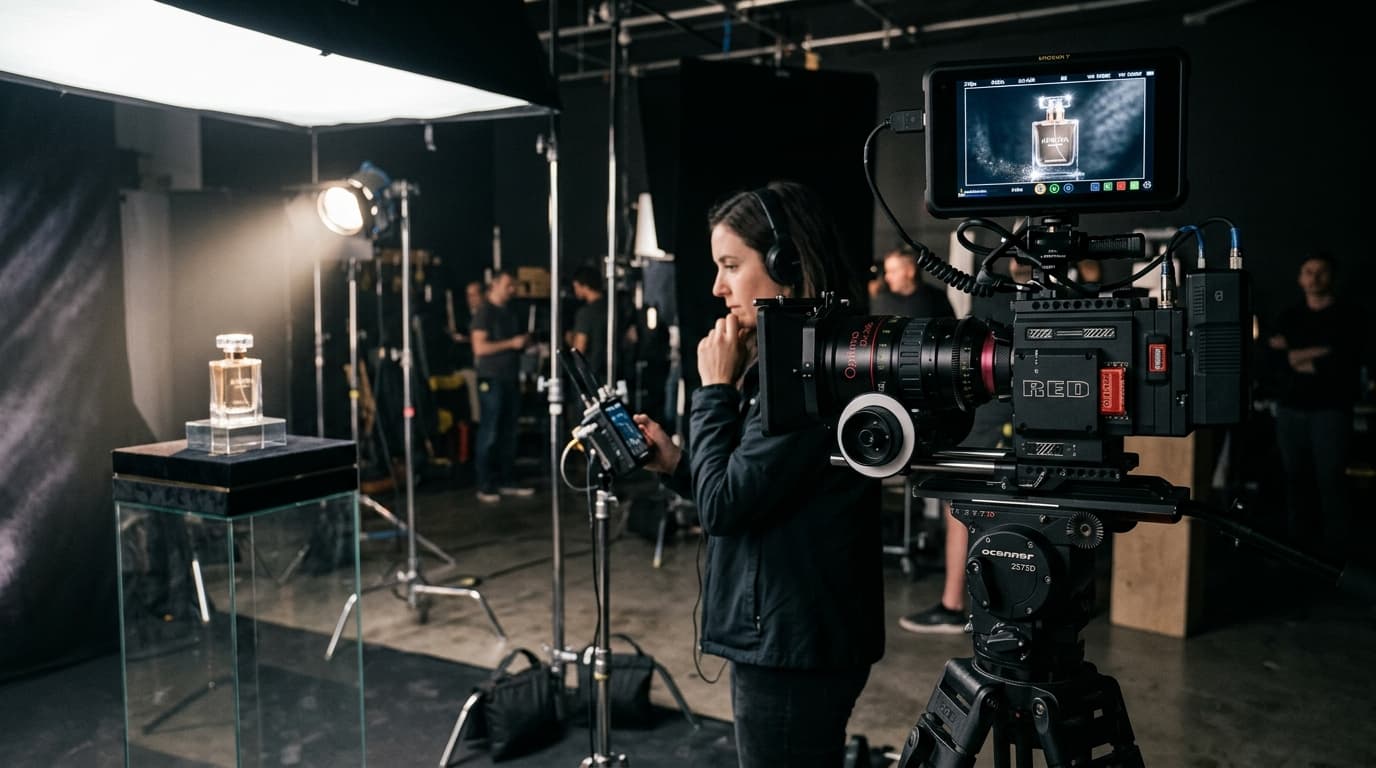
There is one phrase that almost always comes up when a business owner considers video production: "Using a smartphone is enough—the camera is already good." This phrase is a trap precisely because it contains a grain of truth.
Today's smartphones are indeed remarkable. Their sensors can record in resolutions once exclusive to professional cameras, and under the right lighting, the results can impress anyone. But here lies the logical fallacy: the relevant question is not "is the camera good enough?", but rather "what am I actually selling when I show this video?"
Because a commercial video never just records a product. It records—and broadcasts—how seriously you take your own business. And that perception, once formed in the minds of potential consumers, is far harder to fix than to build correctly from the start.
The Fallacy of "Good Enough": Tools Are Not Execution
The "a smartphone is enough" argument rests on the tacit assumption that video quality is determined by the camera. This assumption is flawed, and its fallacy can be fatal to a brand's image. A camera is just one of many variables that determine whether a video feels premium or mediocre.
What distinguishes a high-end video from ordinary footage is not sensor resolution, but the decisions made around it: how lighting is set up to create dimension and atmosphere, the angles from which subjects are shot to feel alive, how camera movement is designed to guide the viewer's eye, and how colors are polished to convey specific emotions. A smartphone in the hands of an experienced cinematographer can produce work that far surpasses an expensive camera in the hands of someone who doesn't know what they are doing. Tools are never the deciding factor; execution is.
This is the core point that is often missed. When someone says "a smartphone is enough," what they actually mean is "I just need to record." But commercial video is not about recording—it is about directing perception. And perception is not built by pressing the record button; it is built from a series of deliberate choices, most of which have nothing to do with the camera brand.
Visual Psychology: How the Brain Evaluates Price Before Seeing the Label
This is where premium video works on a level that consumers rarely realize: the subconscious level. The brain makes judgments about value and quality long before conscious reasoning has a chance to weigh the price. These judgments are triggered by visual cues we absorb in an instant, and these cues are mastered through mature production.
Dramatic lighting creates depth and definition—it tells the brain that this object is worthy of close attention. Dynamic and controlled camera movement gives an impression of fluidity and control, two things we instinctively associate with expertise and class. Cinematic color grading—a color palette deliberately chosen and harmonized—conveys a mood and places the product in a world that feels larger than just a commercial object. The combination of all this dictates the subconscious conclusion: this product is highly valuable.
Interestingly, this mechanism works in reverse as well, and therein lies the danger. When consumers see a video with flat lighting, missed focus, or raw colors, their brains draw conclusions just as quickly—but in the opposite direction. It is not "this product is cheap" that they consciously think, but rather a vague feeling that "something is not quite convincing here." And that vague feeling is enough to make them hesitate, delay, or switch to a competitor who presents themselves more convincingly.
There is an important consequence to this reality: poor visual quality is not neutral. It is not merely "unhelpful"—it is actively harmful. A mediocre video does not leave a blank impression; it leaves a negative impression that sticks to the brand. For businesses looking to position themselves in the premium class, this is no small matter. You cannot claim to be a luxury brand while presenting yourself with visual execution that says otherwise—consumers read that inconsistency, even if they cannot explain it.
The Salesperson Who Never Sleeps
Let's change how we view video production costs. Some business owners see it as a one-time expense: pay, get the video, done. But this perspective misses the most valuable trait of a well-produced video—it never stops working.
Imagine the best salesperson you've ever had: the one who explains product benefits most eloquently, delivers messages most consistently, and never misspeaks. Now imagine that salesperson being in a dozen places at once, working twenty-four hours a day, seven days a week, without ever getting tired, without ever asking for leave, and without ever delivering a different message than before. That is, functionally, what a powerful commercial video does. It delivers your best pitch—complete with a well-thought-out script and seamless execution—over and over again, to everyone who finds it, on every platform, at any time.
This is what shifts the calculation from an expense to an investment. A video produced at a certain cost today will continue to convince potential buyers for months, even years, after its production. Every time someone new watches it and is moved to trust your brand, that video "pays back" a portion of its production cost. Unlike paid ads that stop delivering results once the budget runs out, a good visual asset keeps working for free after the initial cost is spent.
This investment logic becomes even stronger when we remember that the video works across all touchpoints simultaneously: on product pages, on social media, in sales presentations, and in emails to prospective clients. One production, multiple battlegrounds. Charging its cost to only one channel or one campaign is equivalent to underestimating its true reach.
Calculating the Invisible: The Cost of Not Investing
Discussions about investment often stop at what is gained, when an equally important side is what is lost when we choose the cheap route. The cost of a mediocre video rarely appears on an invoice—it appears in forms that are harder to track: potential buyers scrolling past without stopping, an "average" perception sticking to the brand, and a price gap you cannot claim because your presentation does not support it.
This is the real hidden cost. If your product is actually of premium quality but presented with mid-range visuals, you are effectively discounting your own product's value—a discount you pay not in price cuts, but in consumers who are never convinced that your product is worth a premium price. The difference between the price you could set with a premium perception and the price you are forced to lower due to a mediocre appearance, multiplied by every transaction over the brand's lifetime, far exceeds the cost of a single properly executed video production.
With this framework, the question is reversed. It is no longer "can I afford premium production?", but rather "can I afford the loss of not doing so?"
Investing in the Brand's Future
Ultimately, investing in visual quality is investing in how your brand will be remembered and trusted. A video is not just promotional material that will go stale next week—it is one of the most permanent faces of your business, which will continue to be discovered and watched by people who have never heard your name before.
The decision to produce it thoughtfully is a statement of how seriously you view the future of the business itself. It says, both to consumers and to yourself, that this brand deserves to be presented at its best. And in a market where perception often precedes reality, that statement can be the differentiator between a brand considered "one of the options" and a brand considered "the right choice."
If you want your business to be perceived as more valuable and trustworthy, the starting point is not buying a more expensive camera—it is taking execution seriously. Explore Inba Digital Media's Digital Production portfolio to see how mature execution transforms perception, and let's start a brainstorming session to design your visual masterpiece.
Share